
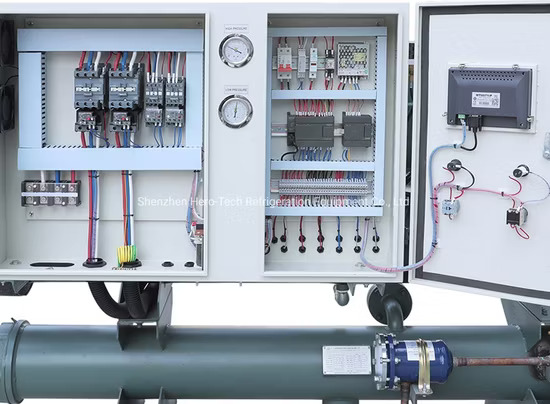
PLC Based Chiller Control represent the forefront of industrial automation in modern cooling technology. By leveraging the capabilities of Programmable Logic Controllers (PLCs), these systems introduce precision, adaptability, and intelligence into traditional chiller operations. Unlike conventional thermostatic or electromechanical control systems, PLCs are microprocessor-based logic units that can manage multiple components, process real-time data, and execute advanced decision-making routines — all without human intervention.
As industries increasingly demand optimized energy consumption, remote monitoring, and higher reliability from their cooling equipment, PLC-based control stands out as the ideal solution. These systems continuously collect data from field instruments such as temperature, pressure, and flow sensors and make split-second decisions on how to operate compressors, fans, pumps, and valves. The result is a chiller system that is not only smarter but also safer, more efficient, and easily scalable.
How PLC-Based Chiller Control Works – Deep Dive
The entire process begins with real-time input signals coming from field devices. These include:
- Temperature sensors monitoring chilled water inlet and outlet temperatures.
- Pressure sensors observing refrigerant suction and discharge levels.
- Flow switches checking that water is circulating properly.
- Level switches monitoring the tank or reservoir fluid levels.
These inputs are sent to the PLC where the actual brainpower happens. The PLC uses a pre-programmed logic routine written in ladder logic or function block language. For instance, if the outlet temperature is higher than the target temperature, the logic instructs the compressor to start. If the condenser pressure is getting too high, it turns on the cooling fans or triggers an alert.
The PLC’s output signals go to actuators like relays, contactors, and VFDs (Variable Frequency Drives). These drive the chiller’s core components — starting motors, opening valves, speeding up pumps — all depending on what’s necessary at that moment.
A HMI (Human Machine Interface) or SCADA system provides visualization. It allows operators to view system status, modify settings, receive alarms, and even track historical performance logs. Everything is neatly organized and updated in real time, making the whole chiller plant transparent and easy to operate.
Smart Functionalities of a PLC-Controlled Chiller
A PLC-controlled chiller does much more than basic cooling. It introduces intelligence into every stage of the process. Here’s how:
It can sequence multiple compressors so that the most efficient one operates at the right time, spreading out wear and tear evenly across all units. It can also monitor external weather conditions and adjust the operation of the condenser fans accordingly — reducing electricity waste.
In systems using VFDs, it controls the motor speed of pumps and compressors based on load. If the cooling demand is low, the pump might operate at 40% speed instead of full throttle, which saves power and reduces heat generation.
The PLC also has built-in interlocks and failsafe conditions. If a flow switch detects no water, the chiller is immediately shut down to prevent freeze damage. If refrigerant pressure goes beyond the safety range, the PLC triggers an emergency stop and displays the fault on the HMI screen with a time stamp and error code.
In multi-zone systems, PLC can even manage different temperature setpoints for different branches — running a more complex control algorithm that optimizes energy use across the entire facility.
Where Are PLC-Controlled Chillers Used?
PLC-based chiller control systems are found across nearly every industry that requires consistent, efficient, and safe cooling.
In pharmaceutical manufacturing, precise cooling is essential for product quality and regulatory compliance. The ability to record data and generate reports is critical.
In laser cooling, such as in printing or medical lasers, small fluctuations in cooling temperature can affect output. PLCs provide rapid, real-time correction.
In plastic molding, chillers cool molds to improve product finish. PLCs manage short bursts of cooling with high efficiency.
In data centers, chiller control using PLCs ensures the equipment remains in safe temperature zones 24/7, backed by alarms and remote monitoring.
Even in beverage plants, breweries, dairy units, and chemical reactors, PLC-controlled chillers play a central role in maintaining safety, hygiene, and production continuity.
Safety and Redundancy with PLC Logic
One underrated benefit of PLC-controlled chillers is built-in safety redundancy.
If the primary temperature sensor fails, PLCs can switch to a secondary sensor or trigger an immediate shutdown to prevent damage. They can also perform emergency routines like purging hot gas, activating backup compressors, or initiating cooldown sequences.
They feature password-protected access, ensuring only authorized operators can make changes. And in mission-critical facilities, PLCs are programmed to automatically restart the chiller in a safe sequence after a power outage or emergency stop — eliminating the need for human intervention.
Conclusion
PLC Based Chiller Control is not just a technological upgrade it’s a transformative shift in how cooling systems are managed and optimized. These systems integrate the core principles of industrial automation with the dynamic requirements of modern-day cooling. By offering intelligent sequencing, load balancing, alarm management, and adaptive responses to fluctuating demands, PLCs redefine operational efficiency.
Industries that adopt PLC-controlled chiller systems benefit from a significant reduction in downtime, improved energy efficiency, faster diagnostics, and the ability to scale up or customize operations without extensive rewiring or manual adjustments. The inclusion of features such as remote monitoring, SCADA linkage, and fault prediction further ensures that plant managers can make informed decisions in real time, from virtually anywhere.