
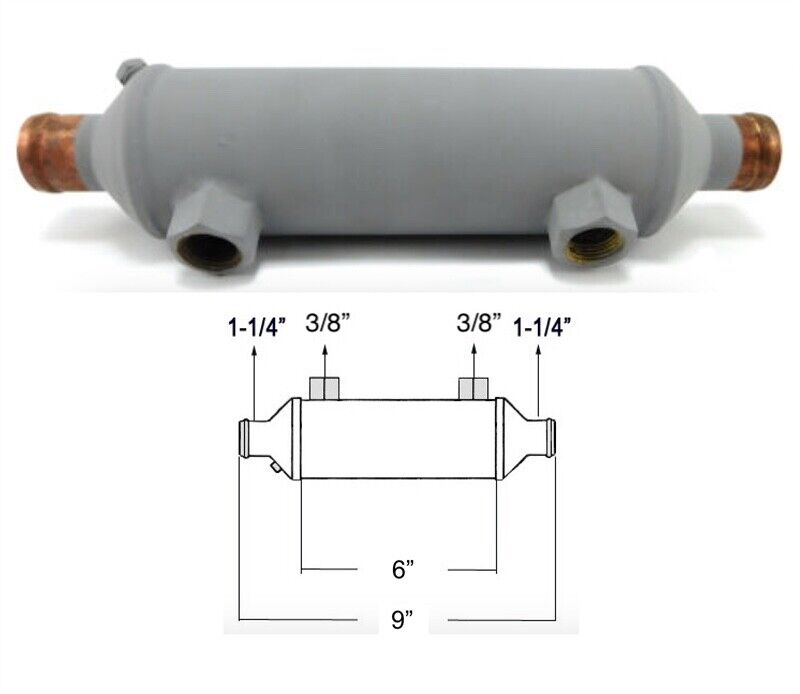
Marine Transmission Oil Coolers are essential heat exchangers used in marine vessels to cool the lubricating or hydraulic oil in propulsion systems. In marine environments, engines and transmissions operate under high load, continuous duty, and fluctuating temperatures, which generates excessive heat. This heat, if not controlled, can degrade the oil, reduce lubrication efficiency, and cause damage to gears and bearings.
By transferring the heat from the hot oil to a cooling medium (usually seawater or freshwater), oil coolers maintain the ideal temperature range for the transmission fluid. This ensures smooth gear shifting, stable hydraulic pressure, and optimal power transfer. Marine oil coolers are designed with corrosion-resistant materials, compact form factors, and rugged construction to handle the demanding marine environment.
Working Principle of Marine Transmission Oil Cooler
Marine transmission oil coolers operate on the principle of indirect heat exchange. The process typically involves the following:
- Hot transmission oil from the gearbox enters the oil cooler through an inlet.
- Inside the oil cooler, the oil flows through a series of narrow tubes or plates.
- Seawater or freshwater is pumped through the outer shell (shell-and-tube) or an adjacent channel (plate type).
- As both fluids pass near each other (without mixing), heat from the oil is transferred to the cooler water.
- The cooled oil exits the system and returns to the transmission.
- The heated water is discharged overboard or sent to another cooling stage.
This setup ensures the oil remains at an optimal operating temperature, preventing overheating, loss of viscosity, or mechanical failure.
Design Features of Marine Transmission Oil Coolers
- Corrosion-Resistant Construction: Essential for operating in salty, humid, and turbulent marine conditions.
- Removable Tube Bundles: Makes mechanical cleaning and inspection easier.
- Zinc Anode Protection: Prevents galvanic corrosion inside the heat exchanger.
- Compact Design: Fits into tight engine room layouts without compromising performance.
- Thermal Expansion Flexibility: Designed to handle thermal expansion without cracking.
- Mounting Options: Horizontal or vertical installation based on vessel design.
Innovations in Marine Oil Cooling Technology
- Smart Temperature Sensors
- Real-time monitoring of oil temperature and pressure.
- Can be integrated with vessel control systems for alerts and automated action.
- Self-Cleaning Coatings
- Anti-fouling and anti-scaling materials reduce the need for manual cleaning.
- Multi-Pass Flow Design
- Enhances heat exchange efficiency by increasing the residence time of oil and water.
- Modular Units
- Allow expansion or replacement without replacing the entire unit.
- High-Efficiency Plate Geometry
- Used in plate-type models for compact size and maximum thermal contact.
Marine Applications of Transmission Oil Coolers
- Main Engine Gearbox Cooling
- Hydraulic System Cooling (e.g., rudders, winches, cranes)
- Stern Tube Oil Cooling
- Thruster Oil Cooling (bow/stern thrusters)
- Auxiliary Machinery Cooling
- Fishing Vessel Gear Systems
- Naval Vessels and High-Speed Craft
Maintenance Guidelines for Longevity
- Flush regularly with freshwater to remove salt deposits.
- Inspect gaskets and seals for wear or leaks.
- Check zinc anodes and replace as needed to prevent galvanic corrosion.
- Use brushes or chemical cleaners to descale tube interiors.
- Monitor inlet and outlet temperatures for signs of fouling or failure.
- Pressure test periodically to ensure no internal leaks or cross-contamination.
Marine transmission oil cooler play a pivotal role in maintaining mechanical efficiency and operational safety on marine vessels. By regulating the temperature of transmission oil, they prevent breakdowns, reduce maintenance costs, and extend the life of crucial propulsion components.
As maritime operations move toward higher performance, lower emissions, and smarter systems, oil coolers are evolving with advanced materials, automated diagnostics, and more compact footprints. Whether in commercial cargo ships, fishing trawlers, or luxury yachts, marine transmission oil coolers are indispensable for smooth and reliable navigation.