
Introduction
Industrial water recycling systems have become essential components in today’s manufacturing and processing industries. As water scarcity grows and environmental regulations become more stringent, industries are under increasing pressure to reduce their freshwater consumption and wastewater discharge. An industrial water recycling system helps solve this challenge by collecting, treating, and reusing wastewater within the facility—significantly lowering the overall water footprint.
By integrating mechanical, biological, and membrane-based treatment methods, these systems allow industries to achieve operational efficiency while protecting local ecosystems. From cooling towers in power plants to cleaning processes in food factories, recycled water can be reused in a wide range of non-potable applications, contributing to both environmental and economic goals.
Source Segregation and Pre-Treatment
Before treatment, industrial wastewater is collected and categorized based on its contamination level and origin—such as cooling water, process water, or cleaning water. Source segregation ensures that clean or mildly contaminated water is not overtreated, saving energy and costs. Pre-treatment steps include oil skimming, pH adjustment, grit removal, and coagulation, which prepare the water for advanced treatment.
Advanced Filtration Techniques
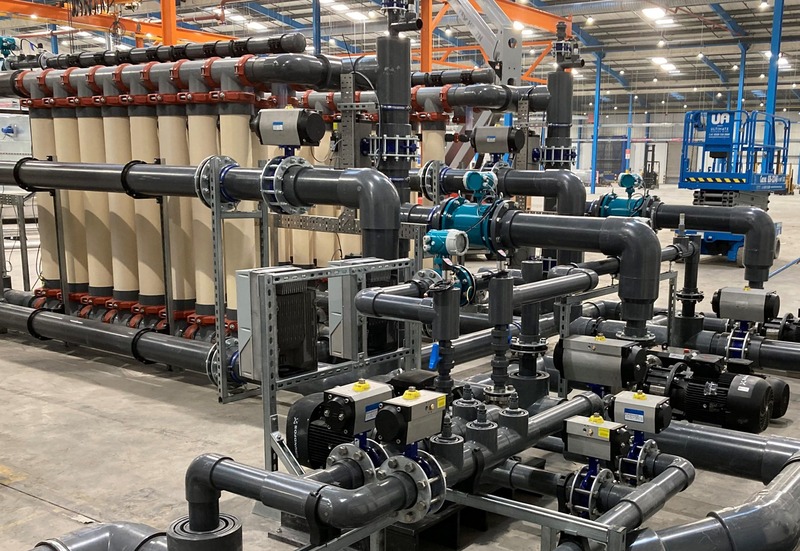
After pre-treatment, advanced filtration removes microscopic contaminants. Ultrafiltration (UF) and microfiltration (MF) use semi-permeable membranes to filter bacteria, suspended solids, and fine particles. These are essential when the recycled water is reused in sensitive operations such as spray cooling or washing in the food and pharmaceutical industries.
Reverse Osmosis (RO) & Nanofiltration
RO is a high-pressure process that forces water through a membrane, removing salts, minerals, and dissolved solids. It’s widely used for producing high-purity water needed for boiler feedwater or chemical processes. Nanofiltration, a less aggressive form of RO, is useful when partial removal of salts and organic compounds is required. These technologies are vital for reusing wastewater in high-specification environments.
Biological Treatment Systems
Industries like food processing, pulp and paper, and pharmaceuticals generate organic-laden wastewater. Biological treatments such as Activated Sludge Process (ASP) and Moving Bed Biofilm Reactor (MBBR) break down organic matter using aerobic bacteria. These systems lower Biological Oxygen Demand (BOD) and Chemical Oxygen Demand (COD), making water safe for further filtration or discharge.
Reuse Applications in Industry
Recycled water can be repurposed for a wide range of applications including:
- Cooling towers, reducing heat buildup in machinery
- Boiler feed water, with ultra-pure requirements
- Process water, in production cycles
- Floor and equipment washing
- Irrigation within facility landscapes
This reuse reduces dependency on municipal water and lowers water bills.
Cost Benefits and ROI
Although installation costs for recycling systems can be high, long-term operational savings are substantial. Industries reduce water purchase costs, avoid discharge penalties, and often qualify for green incentives. Additionally, sustainable operations improve brand image and investor interest, indirectly contributing to profitability.
Conclusion
Industrial water recycling systems represent the future of water management in industrial sectors. With freshwater sources depleting and environmental policies tightening, industries must shift from conventional linear water use (use and discard) to a circular water economy—where water is reused, recycled, and conserved at every stage.
Implementing a recycling system is more than just a regulatory compliance measure; it’s an investment in long-term sustainability, cost reduction, and operational resilience. As technology advances, these systems are becoming smarter, more energy-efficient, and adaptable to a wide range of industrial processes and wastewater types.